

World Cup 2026 Schedule: A Logistical Nightmare Unfolds
An in-depth critical analysis of the 2026 FIFA World Cup schedule, examining the logistical challenges, travel strain, and commercial overreach of the tournament.

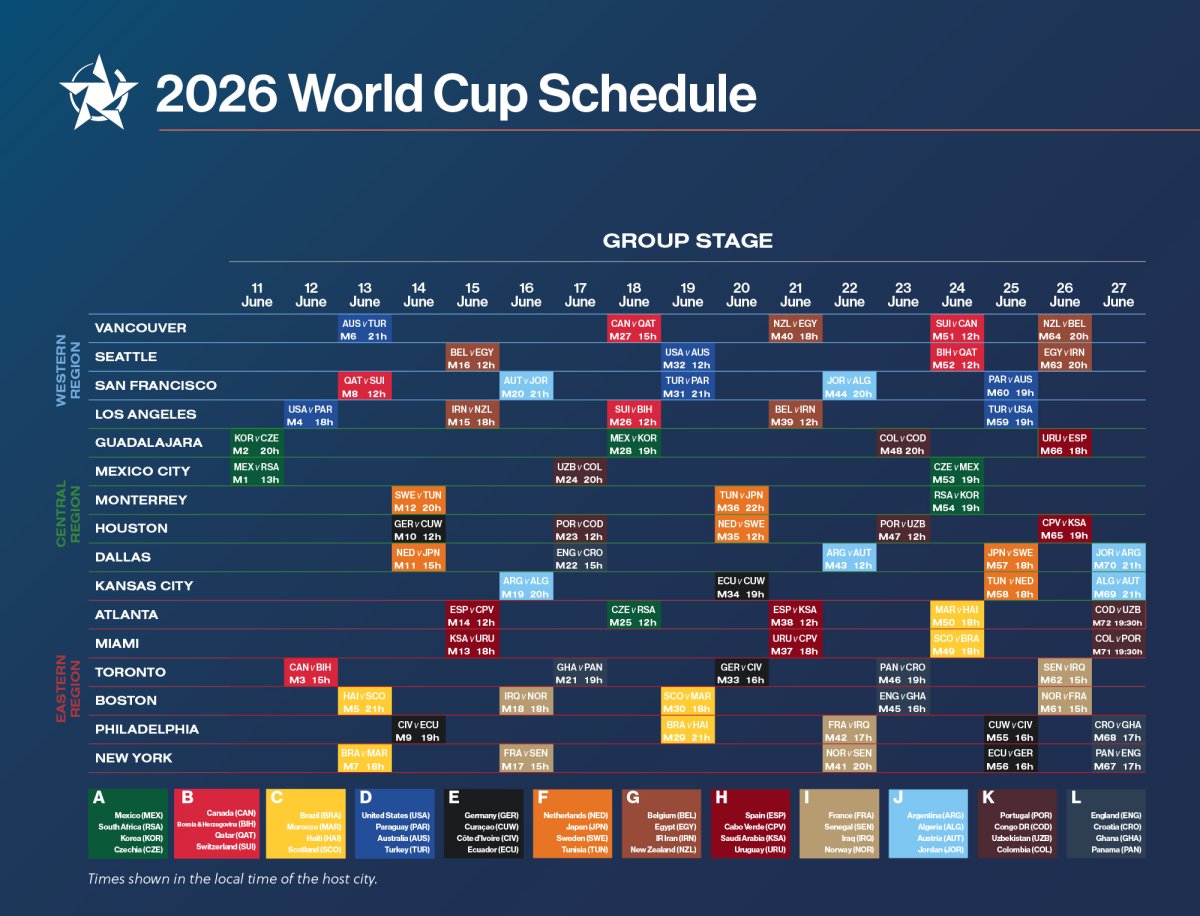
The announcement of the official World Cup 2026 schedule has laid bare the inherent contradictions of FIFA’s relentless expansionist agenda. By ballooning the tournament to 48 teams and spreading the matches across three massive nations—the United States, Canada, and Mexico—the governing body has effectively traded sporting integrity for unprecedented commercial scale. While the schedule promises a spectacle of 104 matches, it simultaneously imposes a logistical burden on players, fans, and the environment that borders on the irresponsible.
The sheer geography of the 2026 host cities presents an immediate crisis for team recovery and performance. Under the current schedule, teams are expected to traverse thousands of miles between group stage venues. For instance, a squad might find themselves playing in the sweltering humidity of Miami before being forced to fly across time zones to the Pacific coast of Vancouver or the high-altitude conditions of Mexico City. This is not merely a travel inconvenience; it is a fundamental disruption to professional athletic preparation. When players are subjected to such extreme environmental shifts, the quality of football inevitably suffers, turning the world’s premier sporting event into a test of endurance rather than a showcase of elite skill.
The Illusion of Regionalization
FIFA has attempted to mask this logistical chaos by grouping venues into regional hubs, but a critical look at the match distribution reveals a hollow gesture. While the intent was to minimize travel, the reality of the 2026 schedule is a sprawling, fragmented tapestry that forces teams and supporters into a perpetual state of transit. The environmental footprint of this tournament will be staggering. Massive carbon emissions from cross-continental flights are an unavoidable consequence of a schedule that refuses to respect the physical limits of the sport. It is difficult to reconcile FIFA’s public sustainability pledges with a schedule that mandates an unprecedented volume of air travel for 48 national teams and millions of traveling fans.
The Compression of Competitive Integrity
Beyond the logistical nightmare, the schedule introduces a competitive imbalance that threatens the prestige of the group stages. With 48 teams divided into groups of three, the risk of collusion in the final match of each group is higher than ever. The schedule structure creates scenarios where teams can calculate the exact result needed to advance, potentially incentivizing stale, risk-averse football. This is a direct byproduct of a schedule designed to maximize the number of games rather than the quality of competition. The focus has shifted entirely toward maximizing broadcasting revenue, as the 104-match format ensures that television networks have a constant stream of content for over a month.
Fan Experience and Economic Accessibility
The 2026 schedule also raises significant questions regarding the fan experience. With matches distributed across 16 different cities, the concept of a 'host city' loses its meaning. Fans are no longer part of a centralized festival of football; they are instead relegated to isolated pockets of activity, often separated by thousands of miles. The cost of following a single team through the knockout stages is astronomical. When you factor in the domestic travel, the premium pricing of tickets, and the inevitable surge in local accommodation costs, the 2026 tournament risks becoming an elite-only event, effectively pricing out the very supporters who form the soul of the game.
- Travel Fatigue: The schedule fails to mitigate the physical toll of intercontinental travel on athletes.
- Environmental Impact: The reliance on air travel across North America contradicts modern sustainability goals.
- Competitive Flaws: The group stage structure encourages defensive, result-oriented football rather than attacking play.
- Fan Exclusion: High costs and geographic dispersion make the tournament inaccessible for the average supporter.
Furthermore, the scheduling of the final in New York/New Jersey at MetLife Stadium highlights the corporate-centric nature of the event. While the venue offers immense seating capacity, its lack of historical football significance compared to more traditional grounds is a point of contention. The schedule is clearly engineered to appease corporate sponsors and maximize gate receipts, often at the expense of the tactical rest periods required for a grueling competition. In professional football, recovery is performance. By compressing the schedule to fit such a large number of matches into a standard tournament window, FIFA is gambling with the health of the players and the aesthetic quality of the matches.
Ultimately, the World Cup 2026 schedule is a testament to the fact that bigger is not necessarily better. While FIFA celebrates the expansion as a democratization of the sport, the reality is a bloated, inefficient, and exhausting marathon. The organization has prioritized the quantity of broadcast hours over the quality of the tournament experience. As the countdown to 2026 continues, stakeholders should look past the marketing gloss and recognize the logistical and competitive compromises that have been made to satisfy commercial greed. The beauty of the World Cup has always been its ability to bring the world together in a concentrated celebration of talent; by stretching this experience to the point of breaking, the 2026 schedule risks diluting the very magic it claims to promote. seeks to monetize. Whether this massive experiment succeeds or collapses under its own weight remains to be seen, but the current blueprint suggests a tournament that values the bottom line far more than the beautiful game itself.
What's Your Reaction?
 Like
0
Like
0
 Dislike
0
Dislike
0
 Love
0
Love
0
 Funny
0
Funny
0
 Wow
0
Wow
0
 Sad
0
Sad
0
 Angry
0
Angry
0
Comments (0)